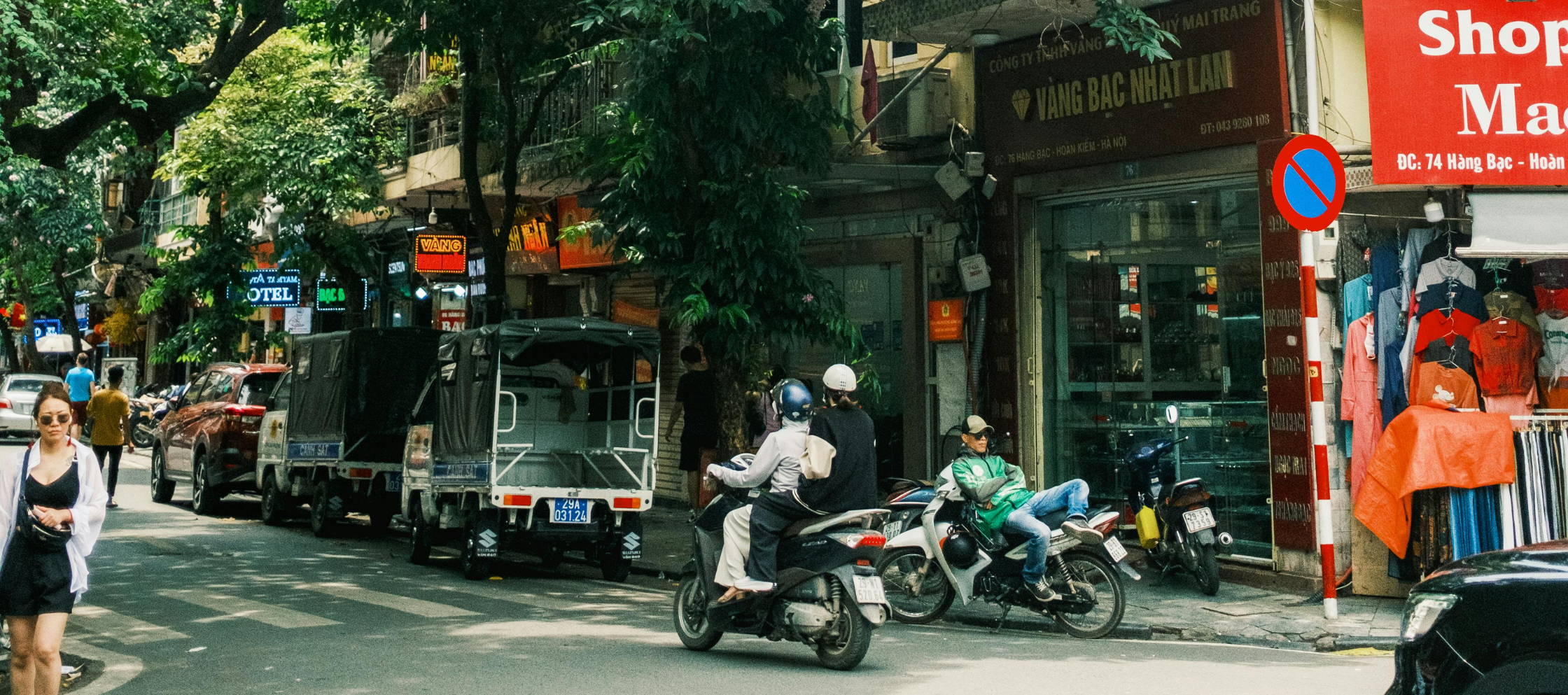
It is the brand new year and we begin it in Ensenada or San Diego South as it is most commonly known. The place is pockmarked with contradictions, each of them existing in clear sight before the other. For one, you can sense the poverty right away–the rough scramble of living on the edge with patrols touting AK-47s in every corner. Open jeep loads of militia with their firearms prowl every street corner. In reality, they are baby-faced young men trying to look terrifying in their impenetrable sunglasses and keffiyehs.

They are here to inspire calm but all they do is its opposite. People mill around them in familiarity or pay them no attention at all. To the wandering tourist, they immediately inspire the question: who or what are they trying to protect? As if to mystify the situation some more, great swirls of Saharan dust have crossed the oceans and settled in Florida and Mexico. Ensenada is heavy with desert sand and grit that have clogged the atmosphere and made our lungs work overtime. The dusty heap of floating cloth pennants lining the streets to create holiday cheer only adds to the general sense of dismay. A few miles away, expensive yachts and tony catamarans that make Ensenada resemble Palm Beach or Cape Cod, are lined up in tidy rows. The new year begins on a surreal note showcasing the glaring abyss that divides the rich from the barely surviving, the real from the disembodied mass of being.


Once in Ensenada, we are bussed across the scraggly landscape to see its famous dancing horses. But first, we must drive endlessly over barren rock and empty dustbowls to get there. There is something disquieting about the valley. It sits unhappily away from the din of Mexico’s metro areas and it should be quiet, but it isn’t. Something doesn’t compute and it’s hard to put a finger on it.

This sensation persists till you get to the stables at Cocina del Valle in Baja California’s Guadalupe area. In these parts, dancing horses are an age-old tradition, an Olympic sport even–a forum for the education of Arabian and Andalusian studs who are taught to perform almost impossible complex footwork and dance routines. The dressage is carefully choreographed and looks effortlessly easy but it isn’t. Wikipedia describes it as such: “As an equestrian sport defined by the International Equestrian Federation, dressage is described as “the highest expression of horse training” where “horse and rider are expected to perform from memory a series of predetermined movements.”

Sitting cluelessly on huge bales of hay under the hot sandy sun, we wait for these predetermined movements to begin. The gaucho with his downward-tilted cowboy hat, rides into the stadium. The handsome stud trots dutifully on the outer perimeter of the ring. The circles get smaller and smaller as the routine demands tighter trots. In the end, the horse pirouettes on its hind legs and raises its front legs high up in the air. This act of grace lasts less than a minute but shows the extreme mastery of the craft and the training that the horse has received.
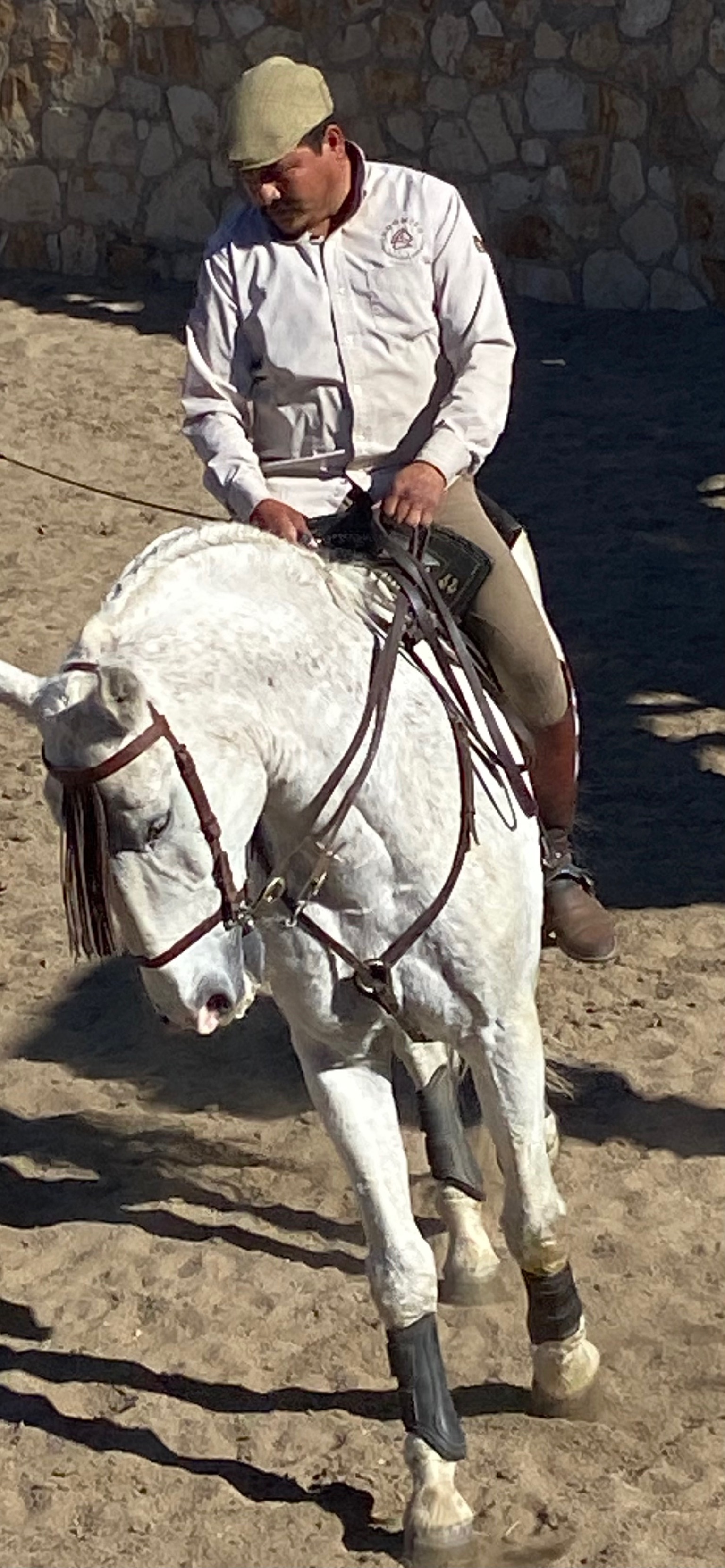

The horse has the ability to carry its entire body weight and that of its gaucho on its hind legs alone. This choreography is pure athleticism intersecting with gracefulness and even in these sultry places, we see true skill and beauty intersecting just like that. The effortlessness of the dance inspires the feeling of sprezzatura, the bubbling-over feeling of spontaneous joy that makes difficult tasks look easy.

Only the tinselly Mexican music breaks through the air. Later, more hard facts emerge that bring us down to reality. We are told that these thoroughbreds average $100,000 USD a horse. A quick arithmetic and we compute that these stables are worth more than 15 million USD alone in value, minus its upkeep and maintenance.


The dancing lasts but a few seconds and much of the time is spent in the run-up. It all goes by in a flash but what I remember from my day in Ensenada is more than the mastery of the craft! I see how lovingly the horses are handled by the stable hands. How readily they nudge up to visitors and swash drool all over them.

Of how baby goats are housed in each stable alongside the horses. Of how the presence of the strongest thoroughbred alongside the babiest of goats helps curb anxiety and skittishness. Of how we can all practice homegrown kindness and compassion past our differences. And of how, sitting on bales of hay in the bleached-white sunlight, we see all our divides melt away as we get to know a little about the art of teaching horses how to dance.

The cliff divers of Acapulco

The world famous Acapulco cliff divers make the task of climbing scraggly, vertical hills look easy. A bunch of beefy, perfectly toned young and middle-aged men, they repeat this task of climbing steep verticals, then diving into the deep gully below multiple times a day. After, they ascend the stairway to the top of the viewing platform where a crowd of spectators are waiting with thunderous applause. Our guide tells us that the sport is so extreme that these young men must retire by their early 30s–because the force of the dive into the water tears their retinas out of their rightful place in their eye sockets. But we see the men passing by. Either the elements have aged them or they are just plain older than their 30s.


One hundred and thirty-five feet up in the air, alongside a shrine to the Virgin Mary, they make this jump, 10-15-20 times a day, including in the evening. This last feat is done by torchlight–to show the viewer how high they are placed and where they are headed. The sheer white-knuckled part of the performance masks the fact that this is all practiced skill, expertise, and intuitive knowhow repeated over and over again. Acapulco’s cliff divers just know how far up they have to be, how to jump head-first into the gully 135 feet below, how to avoid the rocks from shattering their skulls, and how best to make it to the next jump. In terms of sheer numbers, the gully is 16-18 feet deep, while the width of the channel is 42-48 feet wide, allowing for a tidy window of opportunity for where the divers must fall albeit safely.
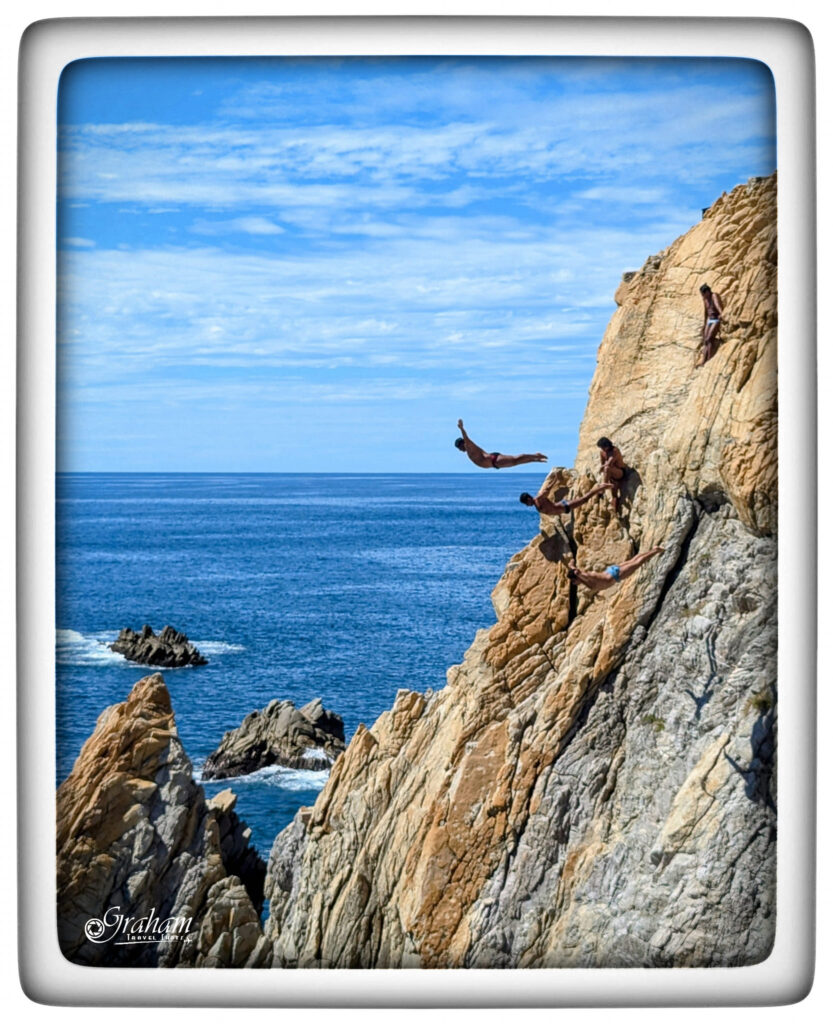
Acapulco is a major seaport in the state of Guerrero in Mexico, population 1.25 million. As we sail into the perfectly moon-shaped bay with its Caribbean aquamarine water, I can understand how at one time, this was the retreat of the Hollywood posse with its picture perfect light and its enormous wealth. Parts of the city, called Diamante and Las Brisas, resemble the tonier parts of Los Angeles in wealth. Acapulco came into prominence in the 1940s as a getaway for Liz Taylor, John Wayne, Cary Grant, and Johnny Weissmuller, who is buried there. But one can argue that the La Quebrada Cliff Divers–who are professional high divers–are the ones who have put the city firmly on the map.


In the 1960s and 70s, the US High Diving team competed with the La Quebrada Cliff Divers on an annual basis during the Acapulco Christmas Festival. Our guide tells us that the Guinness Book of World Records lists the sport as the “highest regularly performed head first dives in the world.”

In preparation, divers start young. It takes them years to arrive at the performance stage. Once they have proven themselves, clusters of them–8 to 10 at a time–climb the scrag as if on command. They do this several times a day and evening hours, this being their primary source of income from the tourist. On the way, they study rock, wind, wave, surge, and the elements to plot the moment that they must plunge. In 1996, women competed for the first time in the Acapulco Cliff Diving Competition and took home the prize money. While the sport is fraught with danger, it is reported that among the Le Quebrada Cliff Divers, not a single death has been reported since its founding in 1936. A bona fide union complete with safety and employment guidelines protects the mostly male divers of this elite community.


A postscript:
Visiting Mexico after several years made me realize how good things can come to naught by the ambition and greed of a few. A once thriving country where the general populace lived mostly in peace has been reduced to drug-infested gang warfare and extreme violence. The evidence of cartel money is everywhere. The existence of an elite dressage school in the middle of a desert is a case in point. Acapulco’s ritzy Diamante area must be protected by a group of elite security specialists at all times. The La Quebrada Cliff Divers must be guarded like a national treasure because they glorify Acapulco and bring in the tourist trade. But society is unequal in very many ways and none so than in countries already fringed by poverty. This season’s brilliant film, Emilia Pérez, highlights this very issue: the pitfalls of having and hoarding too much, the dangers of not allowing all of society to thrive, the sadness inherent in a system where some profit unequally to the exclusion of others. Society seems to be locked in a and/or continuum and there doesn’t seem to be a way out just yet. But the human condition gives off tiny sparks of hope. The horses in Ensenada are flush with good care and they drool lovingly over unsuspecting onlookers. An air of carnival exists around the Le Quebrada Divers: each of their successful dives also signifies that we the witness have seen a piece of remarkable history. And Emilia Pérez shows that even in the midst of extreme violence, honest love can exist at any moment in time.