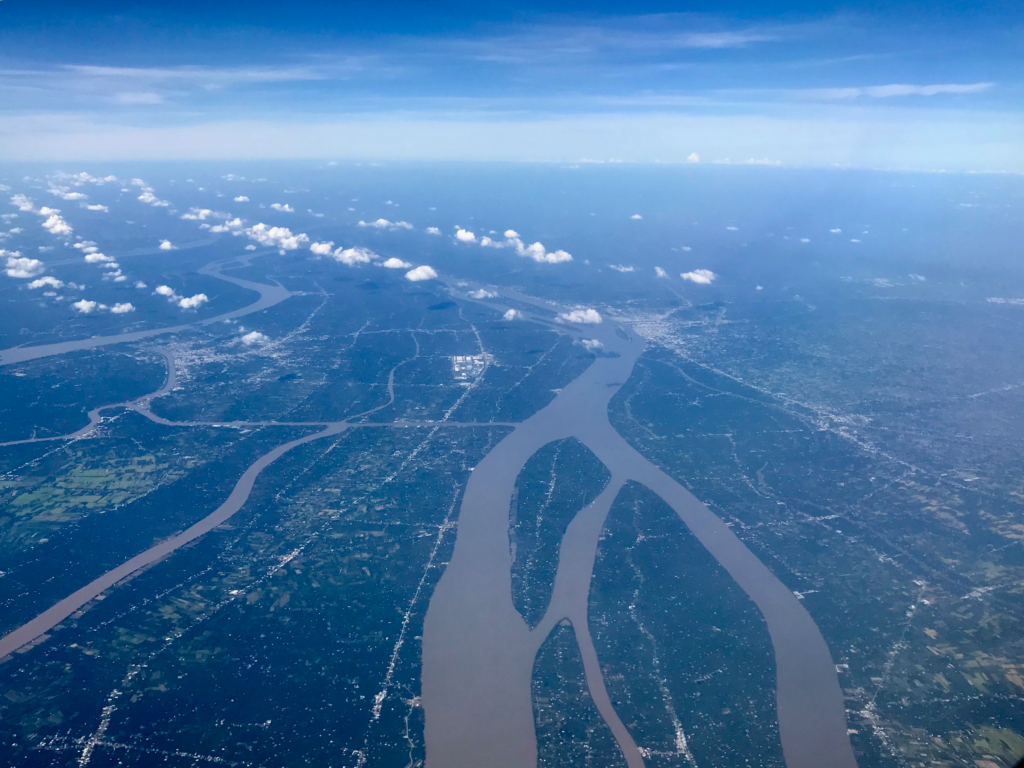
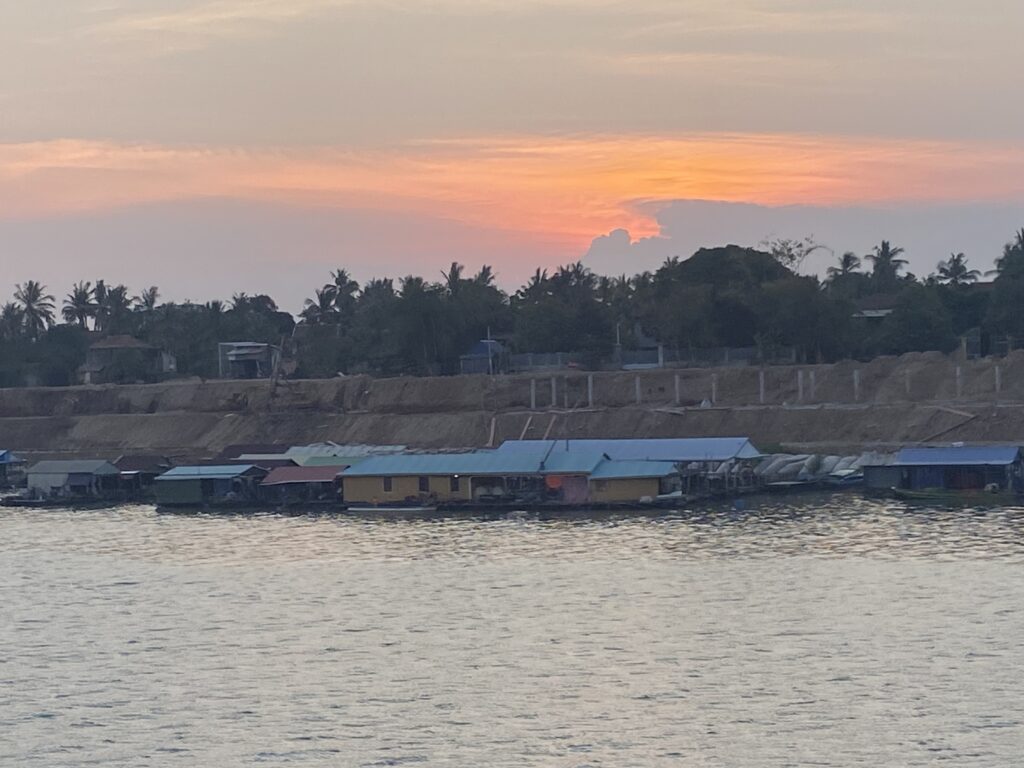
The Mekong Delta splays fat-fingered across a silty, wet canvas. Flowing along the edge of Cambodia and Vietnam, it showcases its riches quietly but powerfully: the second-largest rice bowl in the world, one of the most fertile fisheries on earth, and 5,000 kilometers of channels connecting towns and villages in a web of interdependence. Though the river appears thick and lazy, it is anything but that. Its true wealth lies in sustaining the economies of both region and nation, offering livelihoods to millions, and fostering a cultural resilience that resists the flattening hand of globalization.
The Mekong Delta splays fat-fingered across a silty, wet canvas.
If much of Cambodia and Vietnam has begun to blur into sameness—franchised and digitized—the Mekong Delta guards its past gauntly, even as it evolves to serve its people. It is rich in history and paradox, integrating natural resources with human-made structures, religion with architectural delight, ecology with modern development. Its abundance is so unexpected, so layered, that I think: if I could, I would spend all my time in Indo-China right here.
Though the river appears thick and lazy, it is anything but that.
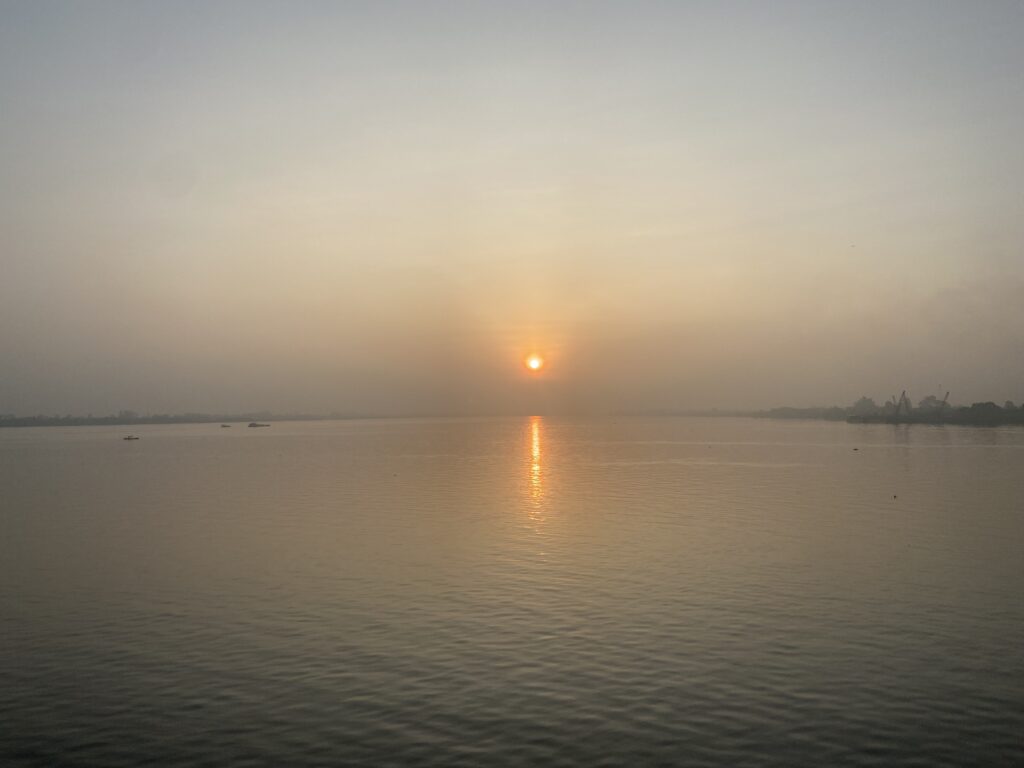
The Mekong Delta is a generous mother. A veritable sea of silt supporting 175 floating villages and 1.2 million fishermen, it holds many firsts: the world’s largest seasonally flooded forest, a vital bird colony with 200 species, and the planet’s most prolific harvest of water snakes—over five million of them. Each November, an enormous water festival celebrates this aquatic kingdom whose bounty supports Cambodian fishermen year-round.
The Mekong Delta is a generous mother… supporting the world’s largest seasonally flooded forest, a vital bird colony with 200 species, and the planet’s most prolific harvest of water snakes—over five million of them.
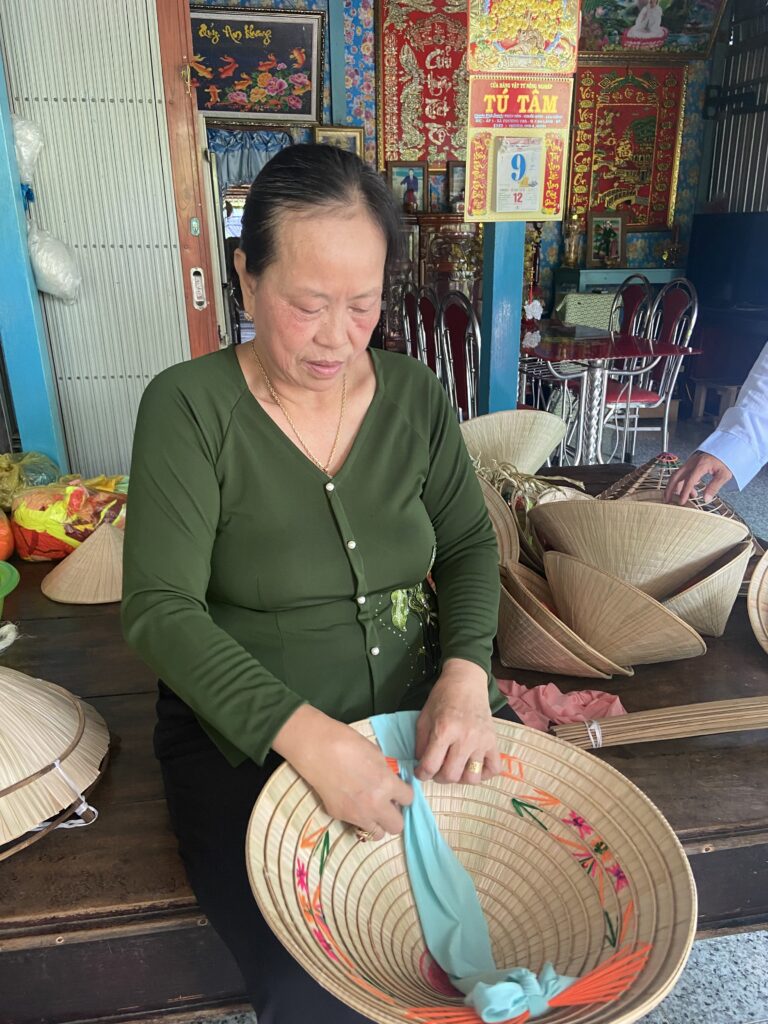
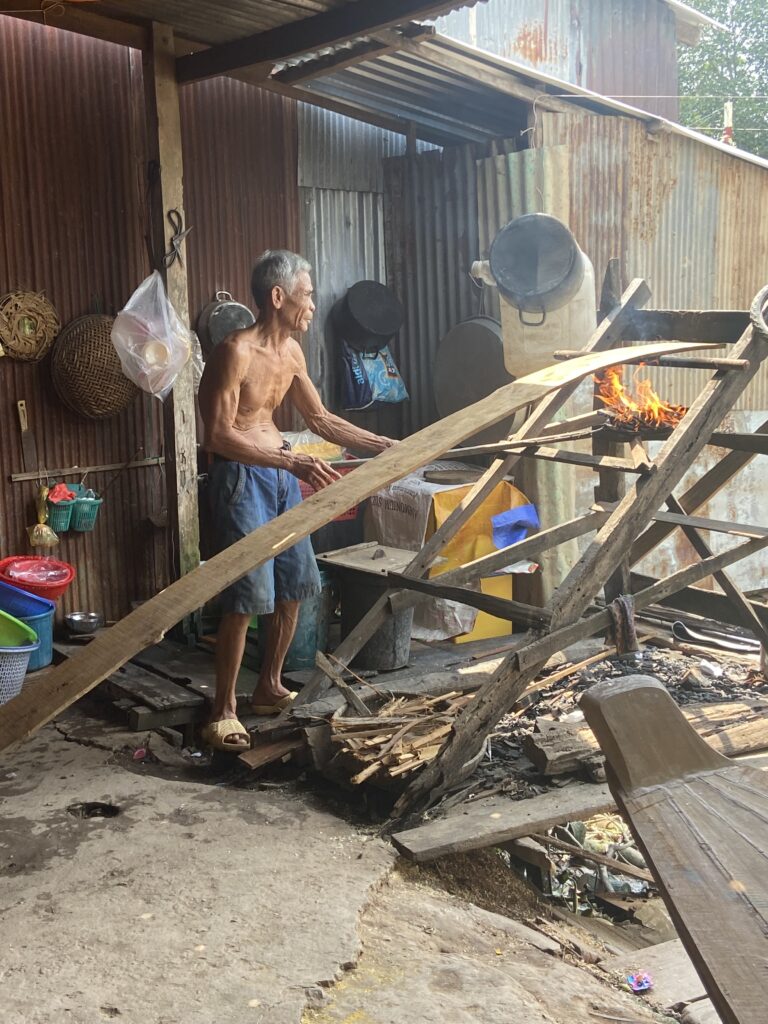
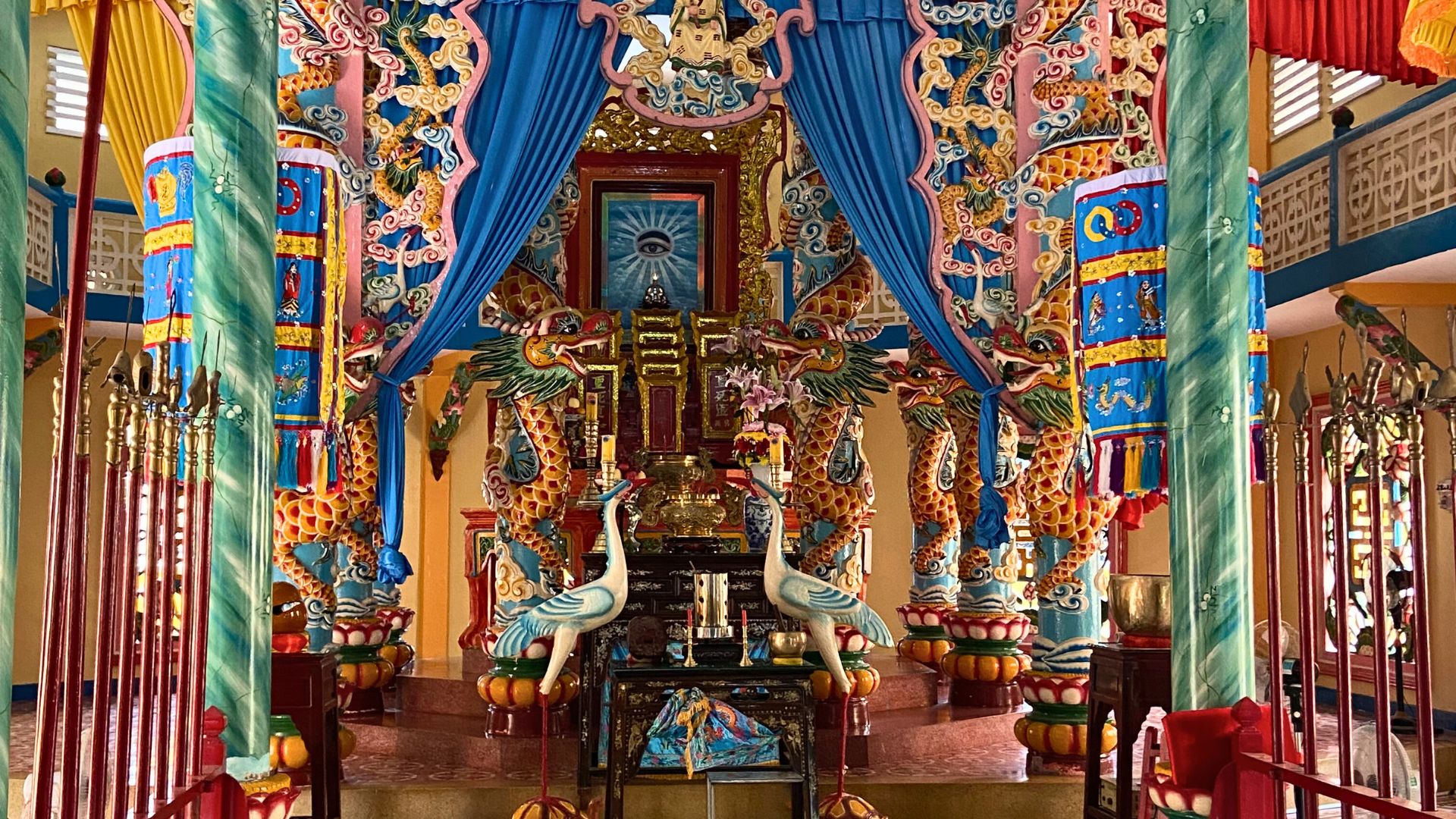
From here, we glide by sampan to Long Khanh village, part of the region known to the Vietnamese as the Nine Dragon Delta. This area contributes 56% of Vietnam’s rice and 40% of its seafood. Because of its rainfall and fertile soil, it is known locally as “No Worries Land.” Gieng Island, shaped like a triangle and covering 50 square miles, is a mosaic of families turning tradition into trade: conical hats, sampans, woven cloth, each craft passed down through generations. Its residents include Roman Catholics, Mahayana Buddhists, and followers of the Cao Dai faith, whose temples are painted with symbolic colors—blue for Taoism, red for Confucianism, yellow for Buddhism—and adorned with the all-seeing Eye of Providence.
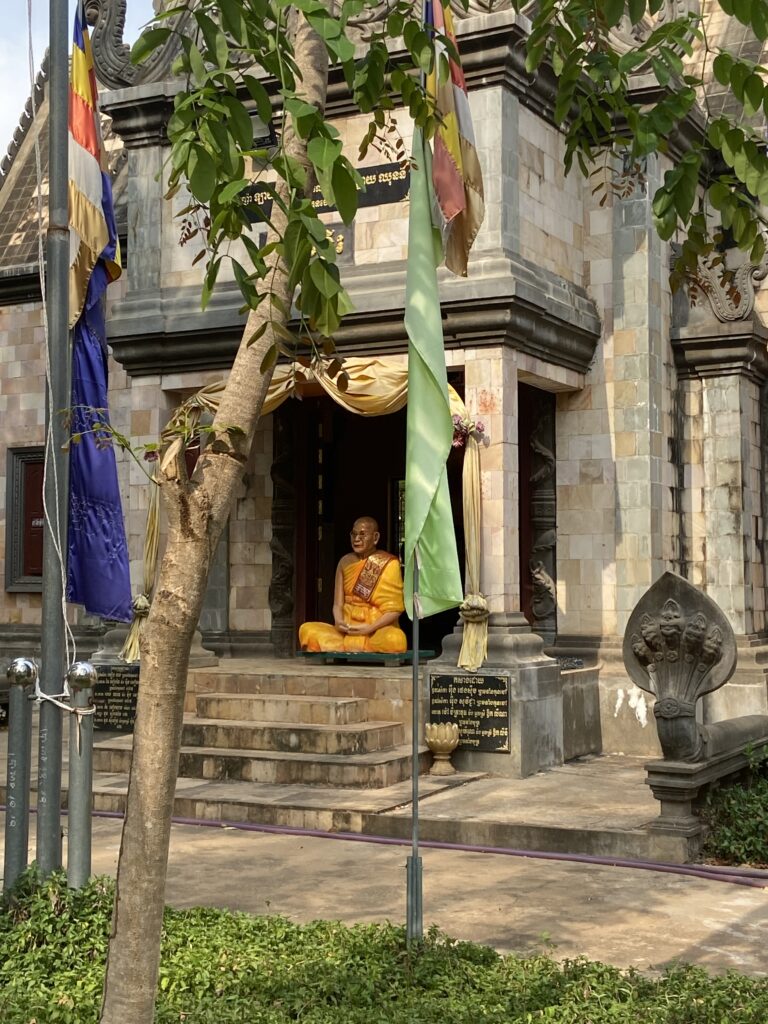
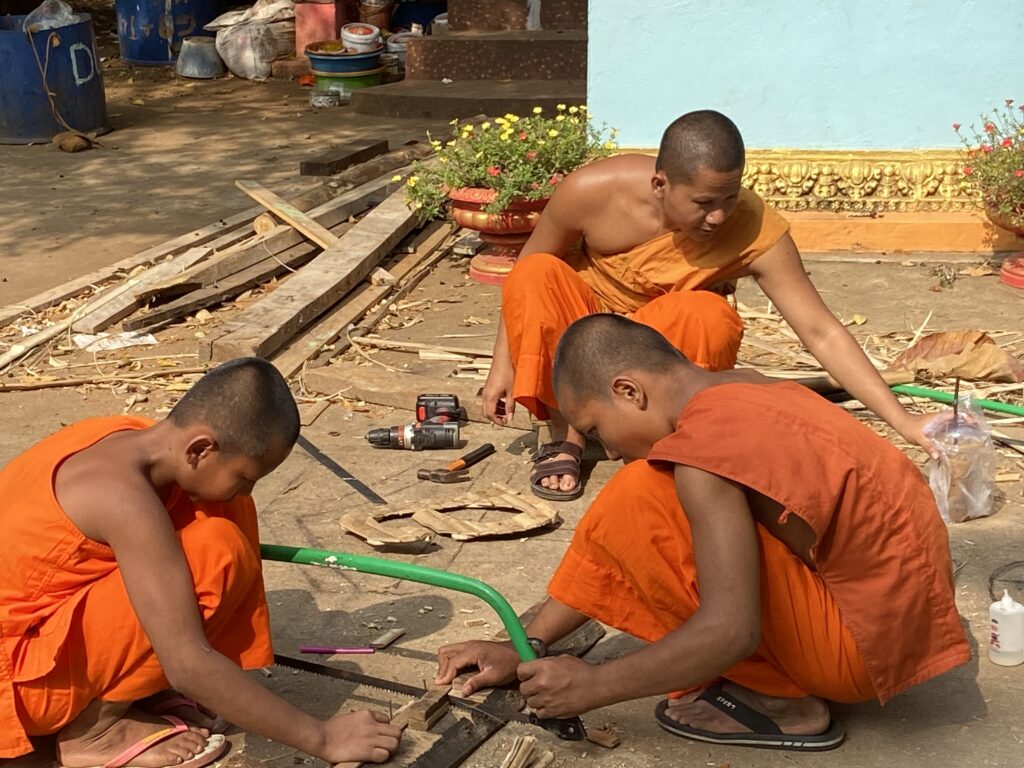
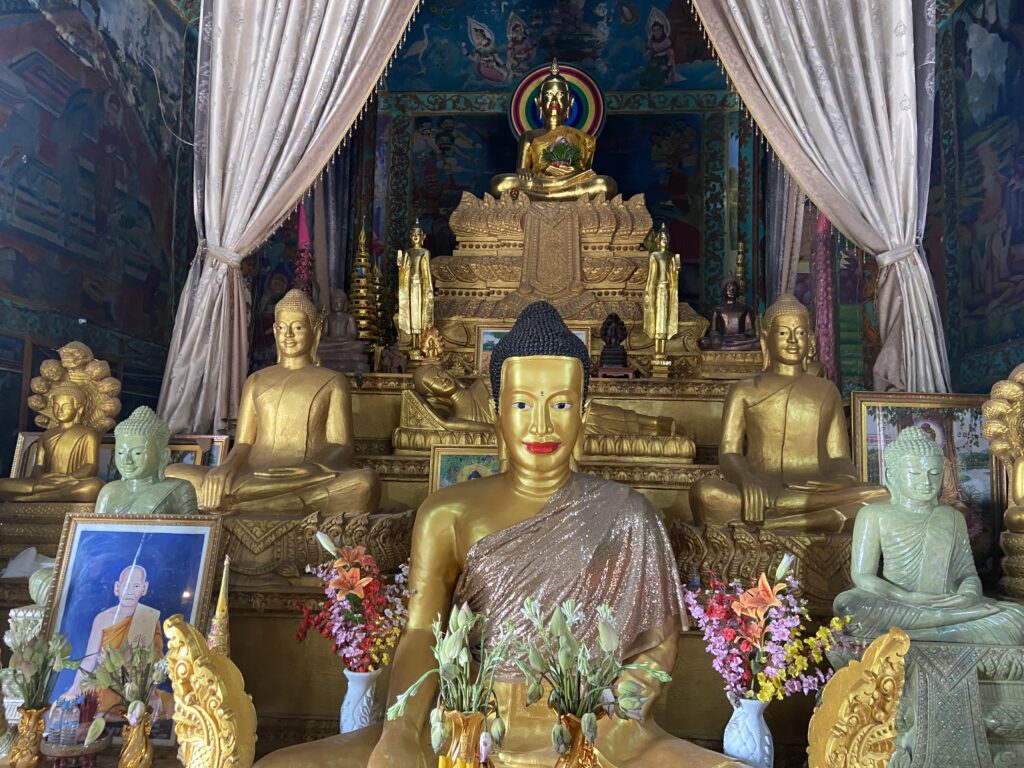
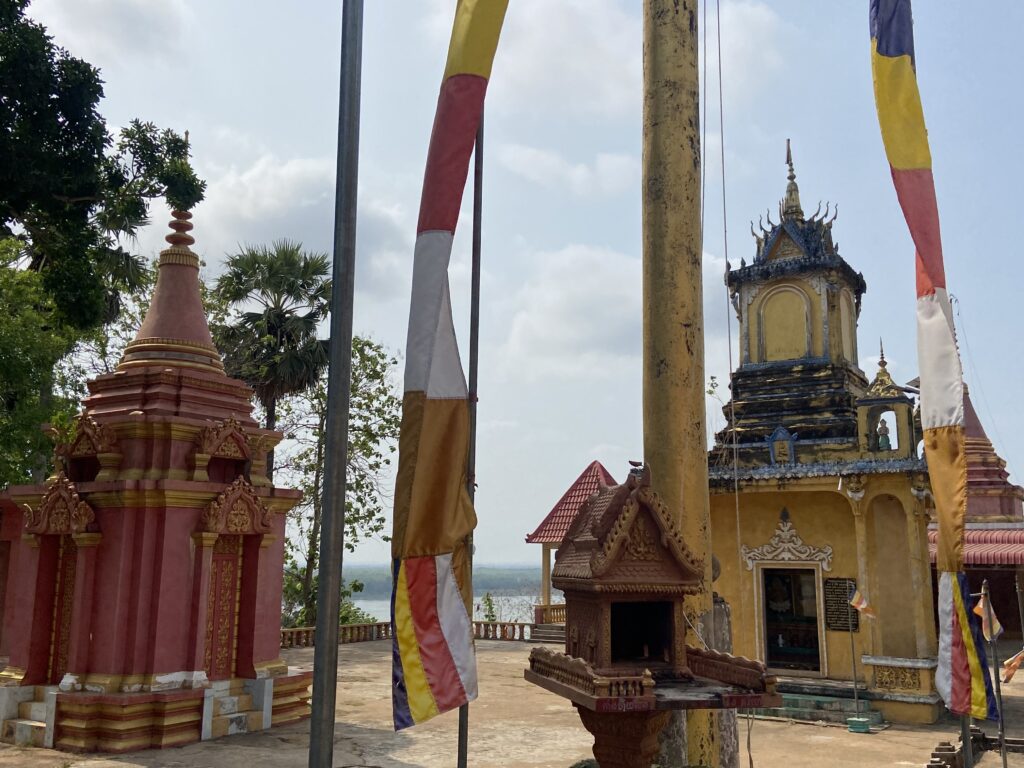
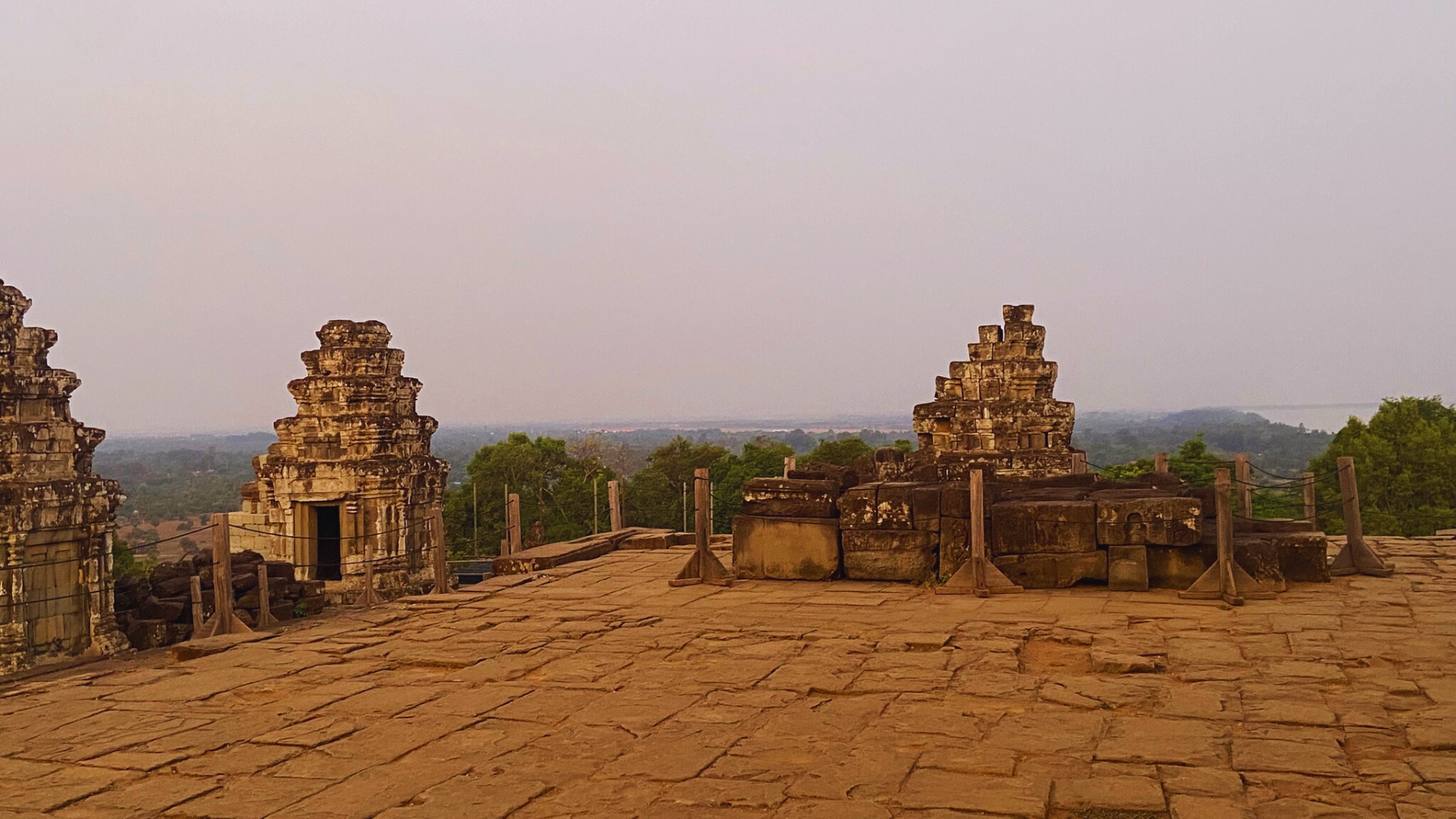
We board a wooden sampan and travel along the Ton Le Sap to Kampong Cham, home to over one hundred mosques. At Wat Hanchey, a 7th-century temple complex perched high above the Mekong, we climb 303 steps and encounter the four ranks of Buddhist monkhood: student, novice, pico, and monk. A teenage student blesses us with water. He appears melancholy, perhaps wrestling with the same questions that haunt seekers everywhere: Why am I here? What is my purpose in life? He seems to carry the burden of wisdom too soon, yet he robes and disrobes with quiet dignity, using the saffron cloth—his only earthly possession—as robe, bowl, blanket, and raincoat.
In Sa Dec, we visit the Huynh Thuy Le House, also known as the Lover’s House. Built in 1895 by a wealthy rice-trading family, it blends Chinese and French architectural styles and became famous as the setting for Marguerite Duras’s novel L’Amant. Its pink walls and shaded gardens feel both grounded and dreamlike, carrying the ghost of longing and unfulfilled desire.
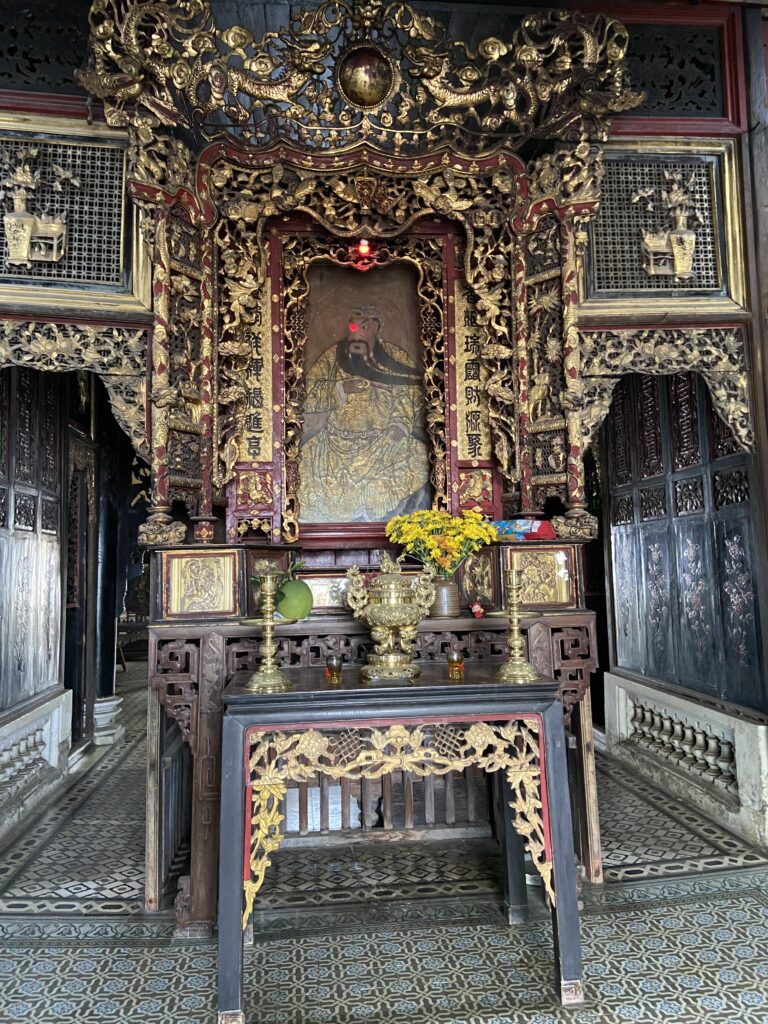
In Sa Dec, we visit the Huynh Thuy Le House, also known as the Lover’s House. Built in 1895 by a wealthy rice-trading family, it blends Chinese and French architectural styles and became famous as the setting for Marguerite Duras’s novel L’Amant. Its pink walls and shaded gardens feel both grounded and dreamlike, carrying the ghost of longing and unfulfilled desire.
As we leave the delta and drift toward Saigon, we pass through Vinh Long, one of the last islands in the watery chain. Its name translates to eternal prosperity. Bounded by the Mekong on one side and the Bassac River on the other, this small island has produced two of Vietnam’s six most recent Prime Ministers. In its quiet resilience, Vinh Long seems to embody the spirit of the delta itself—modest, mighty, and always flowing forward.
The many mysteries of the Mekong Delta remain unresolved.

Thank you for this nice trip you took us to while following your writing.
Zohreh: your words mean so much to me. I appreciate them greatly even as I quietly pen my thoughts in the wee hours of the morning. Thank you for sharing my life with me through my writing…
Forgot to thank you for the beautiful pictures as they made everything more vivid.
Love it!