“Humans matter only insomuch as they contribute to a historic process; outside of history, humans are nothing.” ~ Carlo Mollino
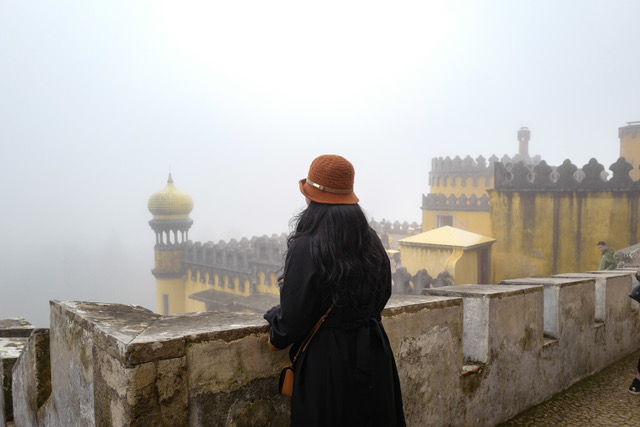
It is foggy outside, not the thin mist that simulates marine haze but the denser variety where visibility tends to destabilize objects, preventing them from ever coming into focus. And so it is today. We have made the 2-hour drive from Milano to Turino in Italy, a drive of 150 kms. Our bus driver is a cross-tempered, mean-mouthed young man who has long threatening harangues in Italian on his phone. We understand very little except the essence of it all. Either he seems to be leaving someone or he is fighting this outcome in the most desperate ways. But we are the sorry victims of his darkness. On the bus, all sixteen of us careen from one side of our seat to another even with our seatbelts buckled. We brace, we feel broadsided, we are squarely in the crosshairs of a relationship gone bad. At once I feel that we are living on the edge of a vast energy field, a limitless ocean of emotional and mental turmoil that is impossible to fathom. These thoughts persist as we pull into Turin around 11 a.m.

I am still fighting off the wine from last night’s dinner at Il Capestrano, a fancy restaurant in Milan specializing in the cuisine of Abruzzo. Our long-time friend and guide extraordinaire, Judy, has meticulously planned every aspect of our trip to view design and art in Milan. She has a sixth sense about things, curating every part of our 8-day adventure so that each one of us will have our deepest desires met. I don’t quite know it but today, at the Casa Mollino in Turin, Judy will have made sure that my insatiable thirst will be quenched, if for a minute. For the longest time, I’ve had an uncanny fascination with Carlo Mollino, an eclectic architect and designer who saw the world in broad swaths of connectedness. I’ve wanted to know him better. And in his apartment in Casa Mollino, under the tutelage of the curator, Napoleone Ferrari, I am about to receive a thorough grounding on who Carlo Mollino was and what he left behind.
1888 Villa Avondo—the street address of Casa Mollino–hides behind brambly rose bushes past a wrought-iron gate on a half-forgotten side street. Mollino owned three such apartments all over Turin—places where he could indulge his creative interests away from his controlling father. Casa Mollino was his escape room, the one spot that he endlessly worked on but hardly ever used and never quite lived in. This is the Warrior’s House of Rest that Mollino conceived as his final resting place. Like the ancient Egyptians whom he undoubtedly studied at the nearby Egyptian Museum, Mollino spent eight years preparing this house like an ancient tomb, filling it with everything that he thought he might need in the afterworld. He decorated the interior, remodeled furniture for the space, fashioned the wall coverings and mirror etchings, designed the photographic displays, and even hand-crafted an oval-shaped bed that resembled the Egyptian skiffs that ferried the dead into the afterlife. Mollino believed that the Egyptians had perfected the art of dying by preparing for their death for much of their life. Outside, the River Po flowed by, his Egyptian-influenced burial chamber overlooking the river of life. A desolate looking ankh—which opens the mouth through which the soul escapes the body—lay in wait on the apartment’s windowsill.

Interestingly, Mollino completed the interior of Casa Mollino and the design of the Regio Opera House and the Turin Chamber of Commerce at the same time. They are so markedly different one from the other that it seems that at least two different architects have designed them. In fact, Mollino considered architecture “a linguistic system that combined different styles and building techniques as a vocabulary to draw on” according to Ferrari. He drew on this extensive vocabulary to complete the final projects in the last decade of his life, 1960-73.

In life, Mollino developed himself to his fullest capacity. An architect; sportsman; cultural historian; designer of motor cars, haute couture, furniture, interiors, and erotica; a photographer; writer of novels and an autobiography; a skier; acrobatic flight instructor; and a professor of architecture at the Polytechnic of Turin from 1949 to his death in 1973, Mollino more faithfully resembled a Renaissance polymath than an Egyptian royal aspiring for the afterlife.

Mollino, who was born, lived and died in Turin (1905-73), cultivated an everything, everywhere, all at once type of outlook. He was born in this famous city known for housing Jesus’ shroud and lived in the 19th century neo-Gothic Casa Rivoli. An only child born into a wealthy family overrun by women, he was pampered by his mother, great aunts, and housekeepers. His father, Eugenio, provided the controls in his life. A strict disciplinarian and a renowned architect, Eugenio had 300 architectural buildings to Carlo’s 13. And this is what Carlo ultimately took away from his parents—Eugenio’s passion and rigor for architectural and foundational brilliance and his mother, Jolanda’s, ability for nurturing and spontaneous exploration.

Stylistically, he fancied himself a Surrealist trending toward his own definition of a Modernist. He was one of the first to have arrived at a definition of what contemporary art meant. He meticulously formulated his ideas on the interconnectedness of all life, noticing the arabesque whiplashes of Art Nouvaeu paintings mirrored in the wide-open sinuous S’s of a skier forming patterns as he glided down hillsides. Or an aeronautical stunt pilot figure-skating in the skies. Beginning with the marble of the fireplace to the designs on the windowpanes, fabric designs of the recliners to the reflected images in multiple mirrors set up for self-reflexiveness, he left nothing to chance.

Taking nature as a source for both engineering and creative energy, Mollino synthesized. He interconnected, filled in the blanks, and formed a coherent universe that was hardly apparent to those with limited imagination. Even as he was creating, he was hypothesizing, theorizing, drawing out generalizations from the evidence that was provided for him. His 50,000 paged archival holdings at the University of Turin formulates detailed drawings on everything: the scale and proportion of ski lifts and backless dresses, the seat of an ample chair resembling the fleshy buttocks of a seated woman, and stunts for airplanes that twisted past hairpin bends and death-defying turns. He fashioned race cars after turbines that referenced the bombs that fell during the blitz. Ultimately, he was interested in mirror images, of silhouettes repeating themselves, in how energies converged or diverged. His imprimatur was lightness and dynamism, of the quickness of joy and the swift movement of the passage of time.

When we leave Napoleone Ferrari’s curated tour of the Casa Mollino, we are in tears. Napoleone is crying silently because Carlo has not received the recognition that he so richly deserves. Some of us are crying because we are humbled by the genius of a man who worked quietly to make the world a better place for all.


This is amazing Anu, the subject as well as the writing. Thank you for introducing Mollino to me. How can so much brilliance, energy, and creativity be in one human? And why is he not as famous as Gaudi or Da Vinci? Beautifully photographed as well. Such detail!
I am curious about one small phrase that jumped out at me – that his household was “overrun by women.” Is that your phrase or his? I keep thinking about this – would we say overrun with men? Seems like he did just fine in spite of or because of all those women! 🙂
I am learning much about you as well, having heard only hints of the wealth beneath the short writings I’ve heard from you. So glad you are doing this, I look forward to the rest.
Great point, Nancy. What I meant to say is that Mollino was nurtured as an artist and a free-thinker in the way that the women in his life were able to provide for him. Mollino grew up in a deeply patriarchal society where men were expected to do “manly” things. By turning to artistic ways even as a trained architect was deeply disappointing to his father. But the women in his life set him free and he was able to explore his capacity to create. His life was marked by the women in it and I hope that this explains my word choice more clearly. Thank you for being there for me…
Spellbound by your ability to capture the spirits d psyche of the man and the spaces he inhabits and creates.
Spellbound by your ability to capture the spirit and psyche of Mollino and the spaces he inhabits and creates
You make my world go around, Amy. Thank you for the affirmation.
tempototo tempototo tempototo
Greetings from Carolina! I’m bored at work so I decided to browse your website on my iphone during lunch break.
I really like the information you provide here and can’t
wait to take a look when I get home. I’m surprised at how fast your blog loaded on my mobile ..
I’m not even using WIFI, just 3G .. Anyways,
very good blog!
Thank you, Tonya, for your expressive words. I hope to be more regular about posting my blogs. Thank you for reading them and commenting on them! I am grateful!
sgcwin sgcwin sgcwin
Thanks for your marvelous posting! I truly enjoyed reading it, you are a great author.
I will be sure to bookmark your blog and may come back very soon.
I want to encourage yourself to continue your great writing,
have a nice evening!
Thank you, Jasmine. Because of lots of tech issues, your encouraging comment is reaching me somewhat later than expected. but it is still deeply appreciated. Thank you!