Part travelogue, part meditation, this journey through Portland’s streets and flavors captures a city that thrives on creativity, community, and a restless search for authenticity.
The Seattle to Portland bicycle race, or STP, ends in downtown Portland’s Holladay Park. It is a thrill to watch swarms of cyclists glide into the finish line, their bodies tilting like schools of whales. After forty-eight hours of heat and asphalt—temperatures spiking to 114 degrees—they arrive transformed. The six thousand riders who began in a cool Seattle parking lot are no longer the same. They carry the wisdom of the road.
Portland greets them with its own energy: liberal, progressive, and open-hearted. Later, my friend Nancy, a lifelong Portlander, quips:
“…everyone is trying to be someone else.”
Her words nudge me toward a more curious lens: not comparison, but immersion.
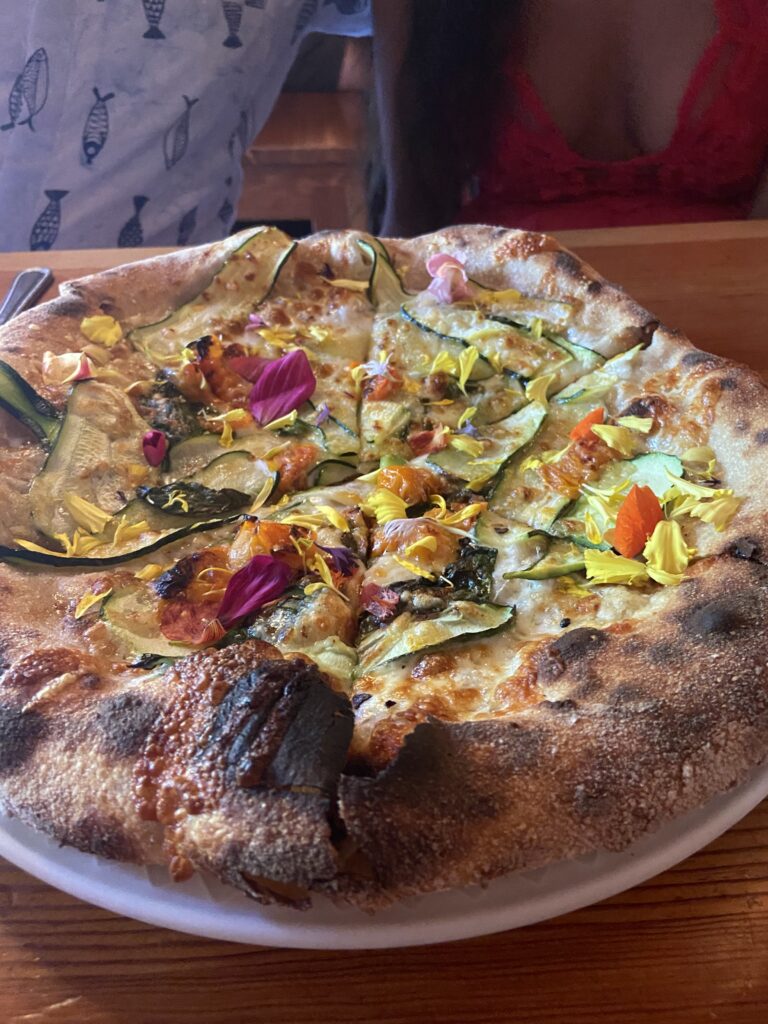
We begin with food. At Lovely’s Fifty Fifty, a family-owned pizza restaurant, vegetables from Oregon farms meet sourdough craft. We savor lettuces with beets and hazelnuts, then three pizzas—rainbow chard with fermented tomatoes, red-gold potatoes with kale pesto, chanterelles with onions and spinach. Each dish surprises us, teaching new flavors. Homemade ice cream, creamy yet unpretentious, lingers in memory.
Our artful downtown hotel offers another glimpse of Portland life. From our window, overlooking a parking lot, we watch midnight exchanges—cars pulling in, brief conversations, money and substances changing hands.
“I wonder about the unseen stories, the heartache hiding in plain sight.”
The next morning I finally meet Nancy, my writing partner of five years. We have shared weekly writing sessions across screens and continents—from Kolkata to New York, Portland to Cincinnati—but never met in person.
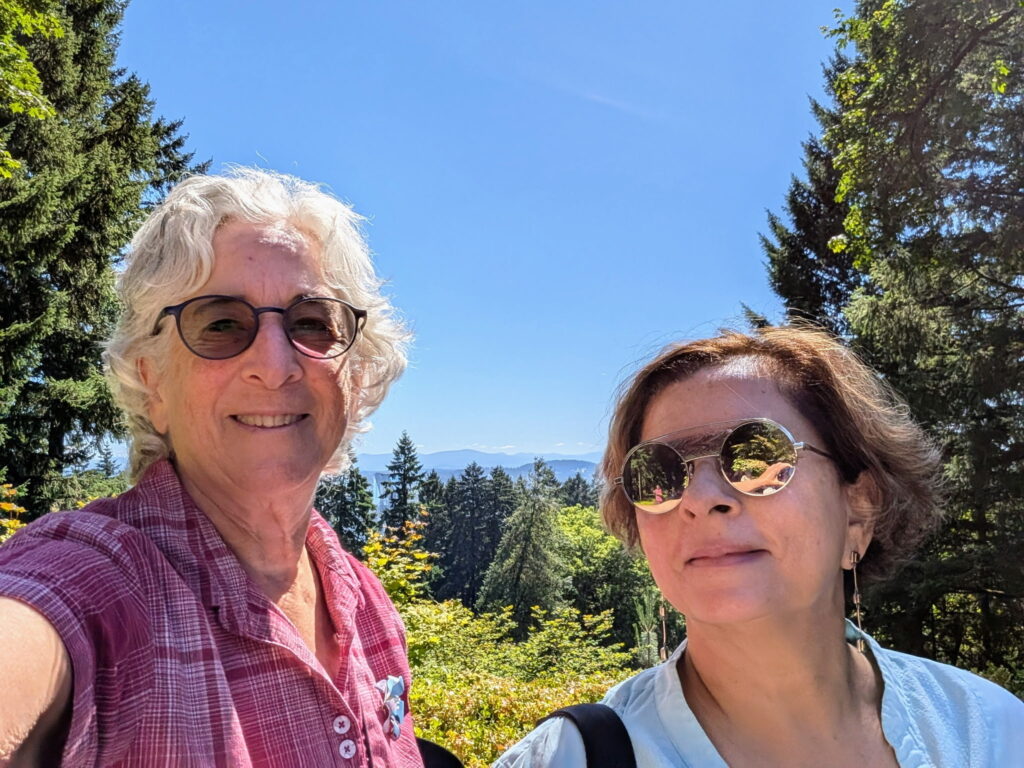
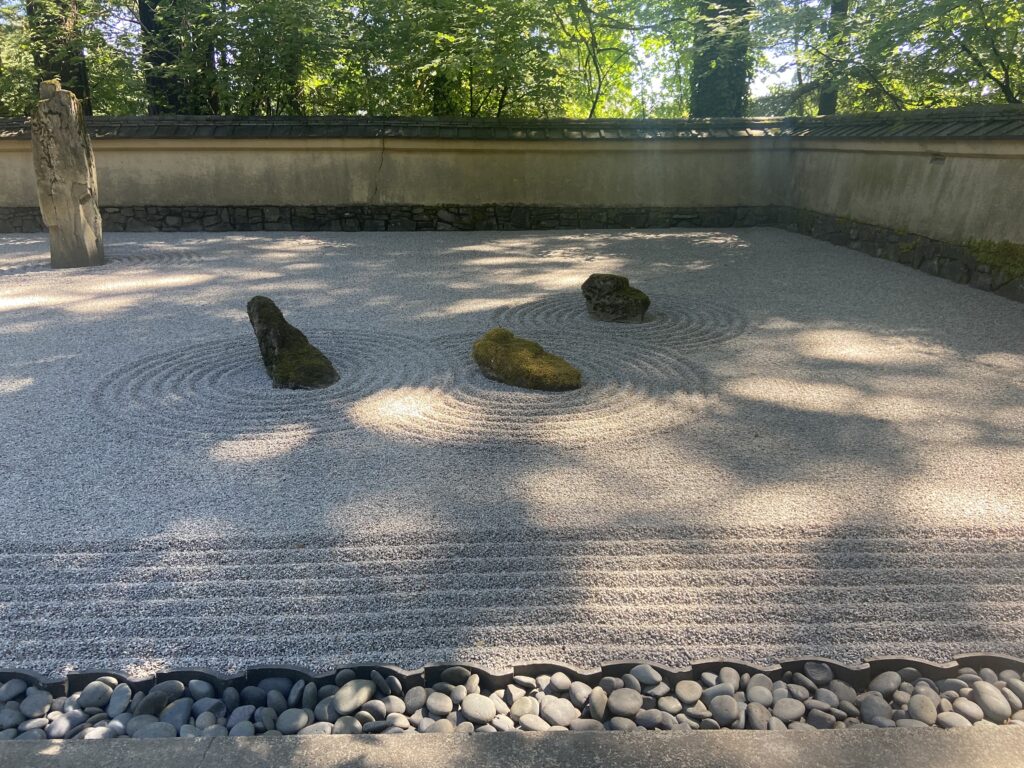
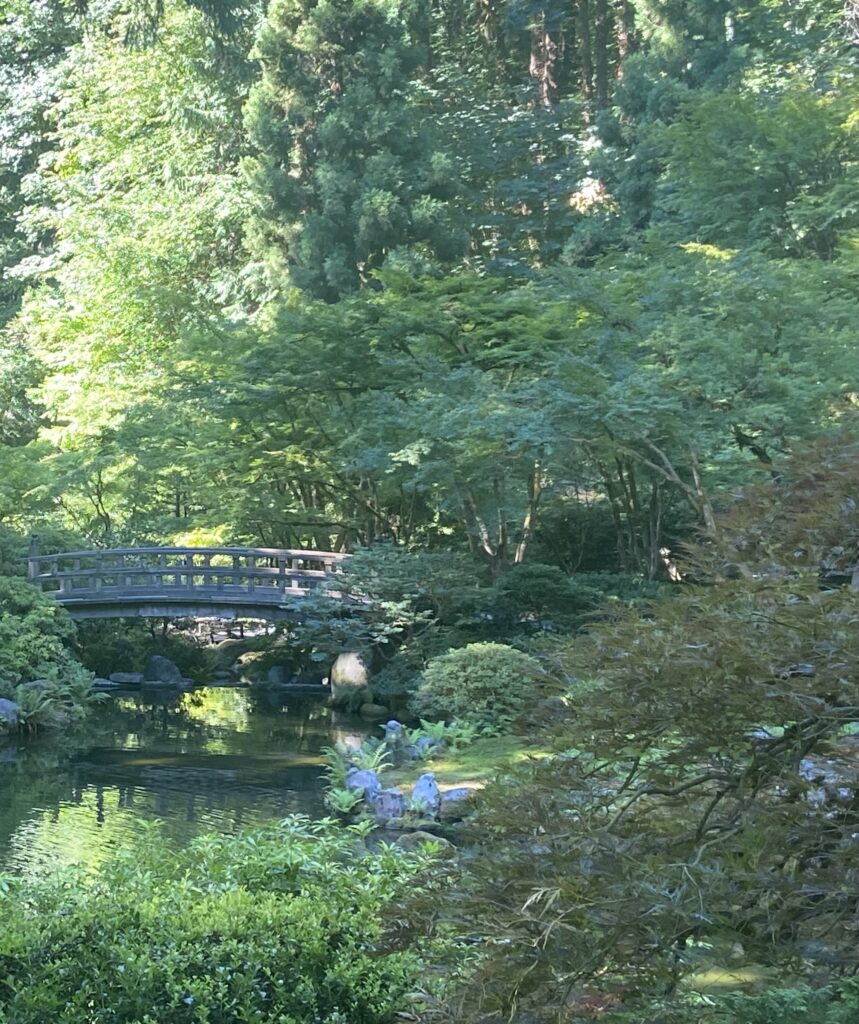
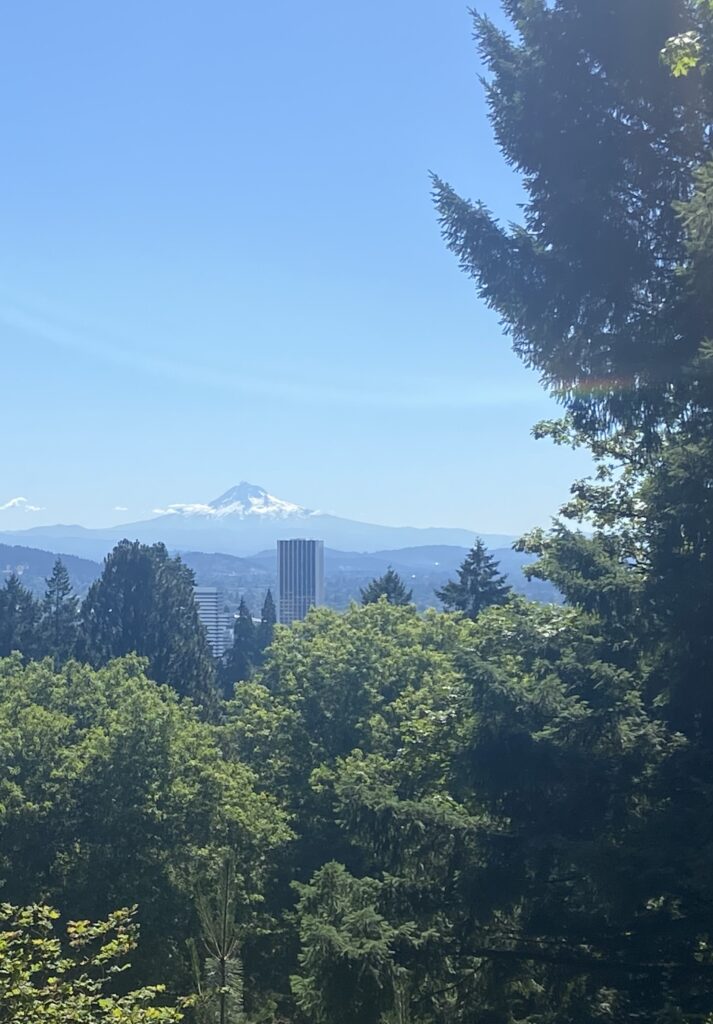
We wander together through the Portland Japanese Garden. Set above the city in Washington Park, it is considered the most authentic Japanese garden outside Japan. Groundskeepers sweep each square foot with miniature brooms, rake stones, and trim moss-covered roofs with monastic care. A plaque by the bonsai pines reads: This Perfect Moment. From an overlook, Mt. Hood rises solitary and luminous.
Being with Nancy makes me breathe more deeply. We talk about writing and why we do it. She says simply, “I write for myself.” She seeks no recognition, just the joy of words, music, family. Her clarity startles me.
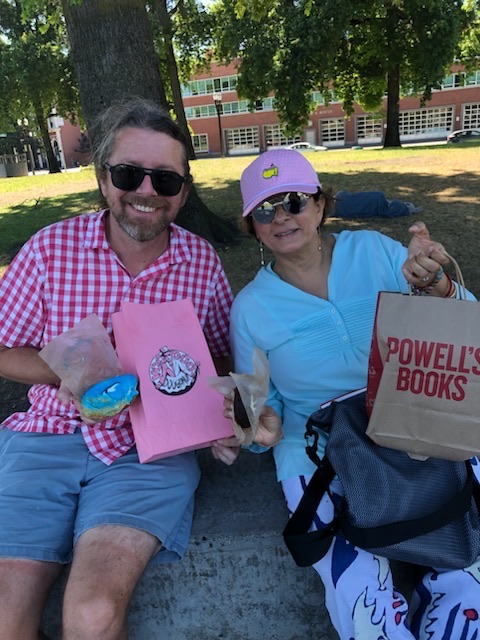
Later, I spend time with my daughter Priyanka and her husband Chris at Powell’s, the world’s largest independent bookstore. Nine floors of shelves buzz with serious readers. I lose myself in artists’ memoirs and leave with Kusama’s autobiography, a Japanese novel on solitude, and Pico Iyer’s Aflame, on silence. Portland, I realize, is as much about ideas as it is about food.
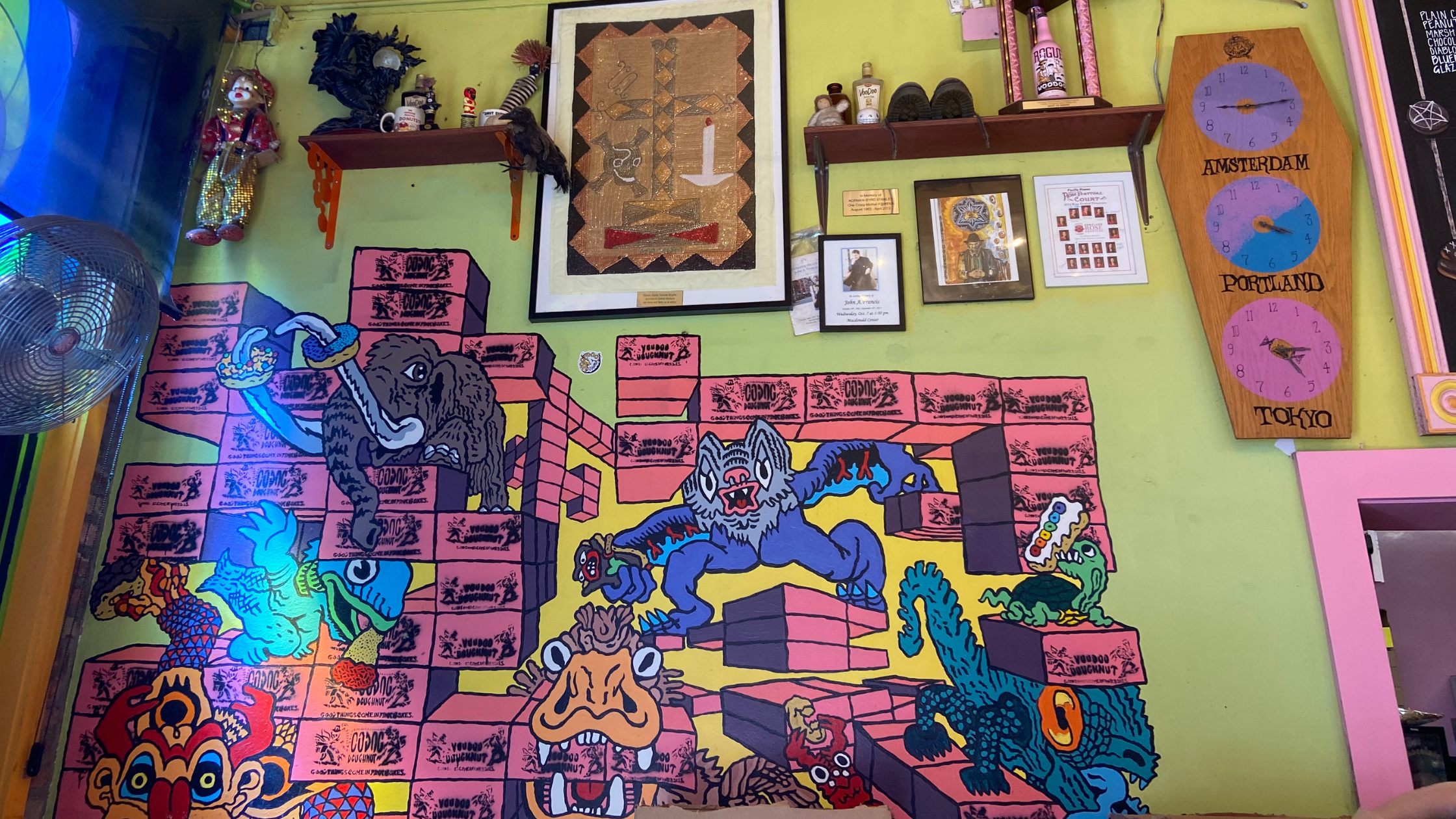
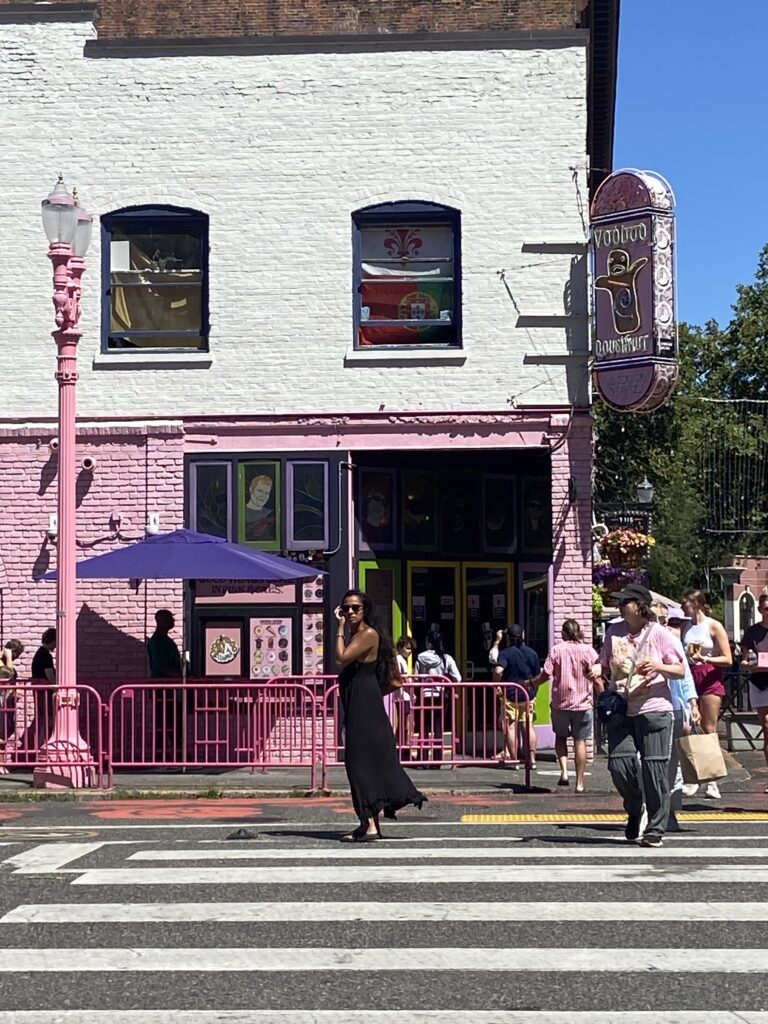
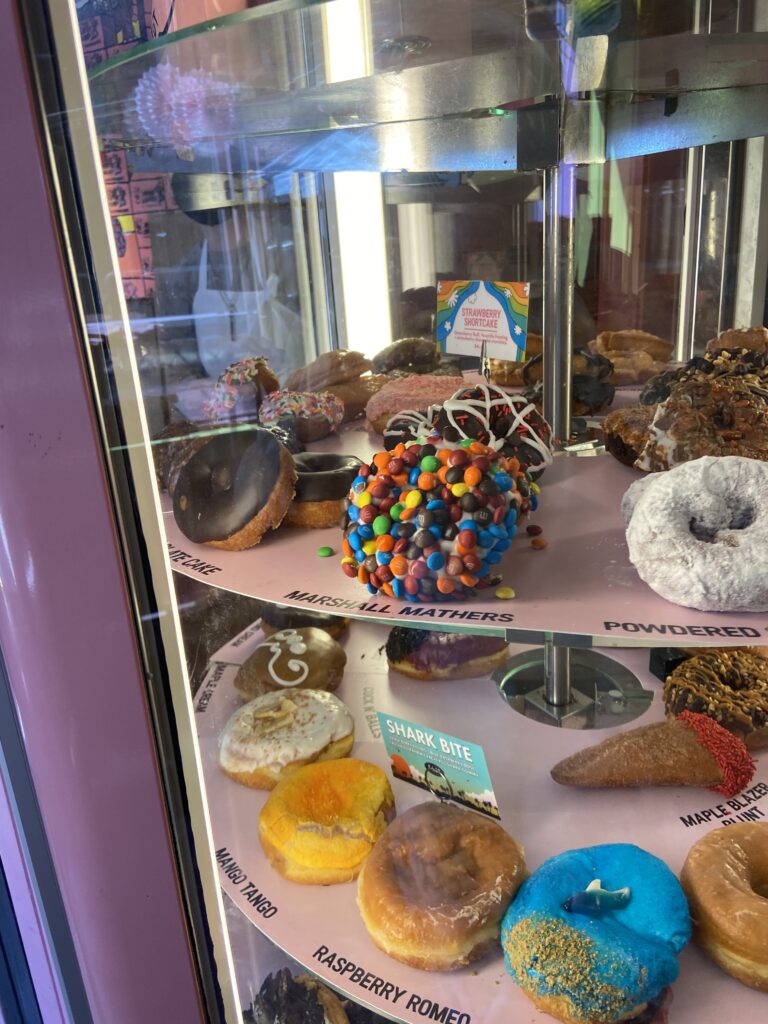
Still, food leads us next to Voodoo Doughnut, a neon pink circus of irreverence. Since its founding in 2003, Voodoo has grown into a cultural icon, marrying playfulness with indulgence. Flavors range from the Shark Bite to the Bacon Maple Bar, but I choose the Diablos Rex: a devil’s food doughnut adorned with sprinkles and a frosted pentagram. Absurd and delicious, it lives up to the tagline: The Magic Is in the Hole.
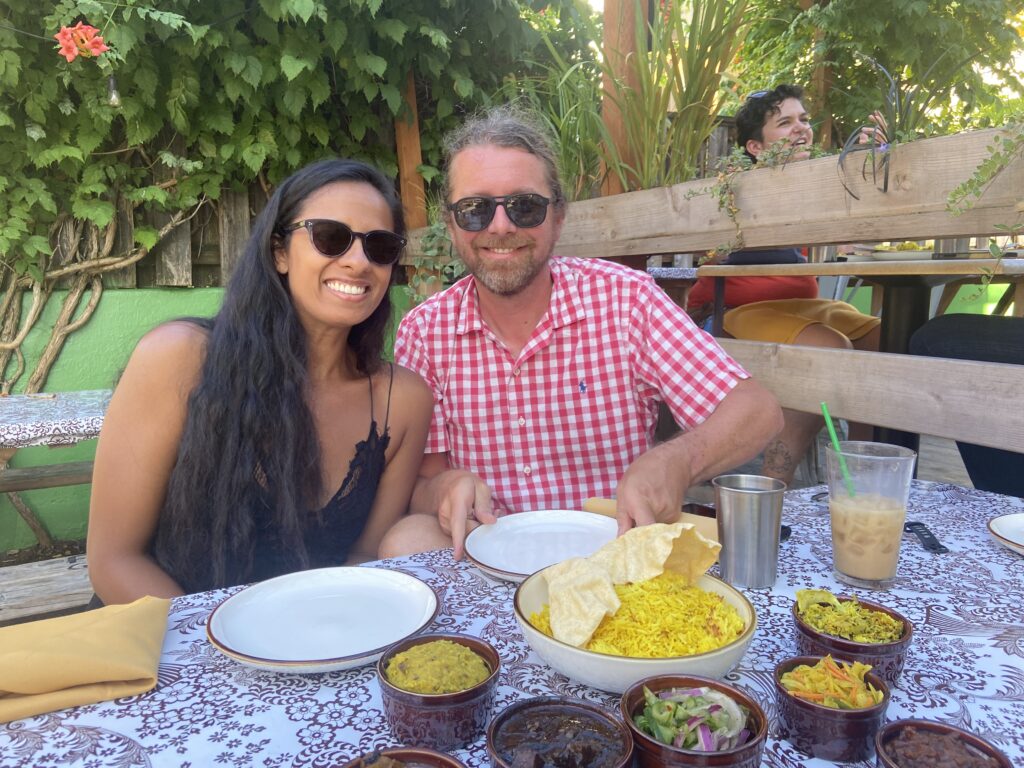
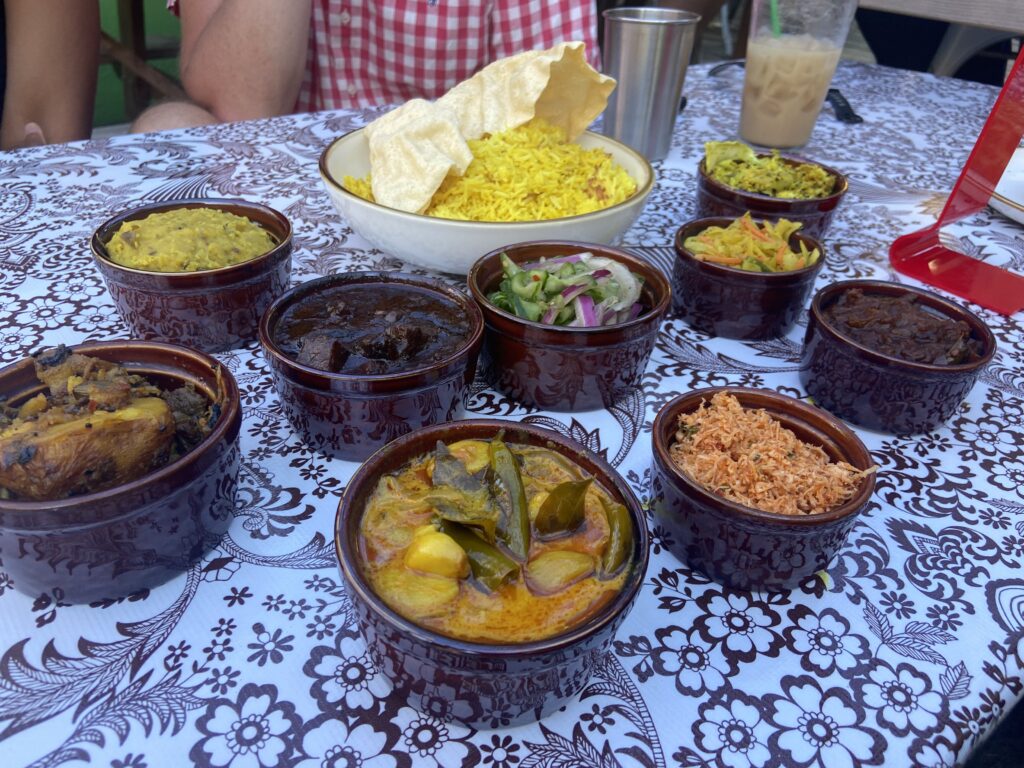
On our way to the airport, we end with a Sri Lankan feast at Mirisata, a worker-owned cooperative. Vegetable roti, deviled potatoes, cucumber sambol, yellow rice, pickled eggplant—all vegan, all nourishing.
“Mirisata’s logo is the Sri Lankan jungle fowl, a bird that refuses domestication. Like Portland itself, it insists on living free.”
Thirty-six hours in Portland leave me both grounded and inspired. From the cyclists to the gardeners, the doughnut-makers to the bookstore browsers, this city pulses with imagination, resilience, and authenticity.